
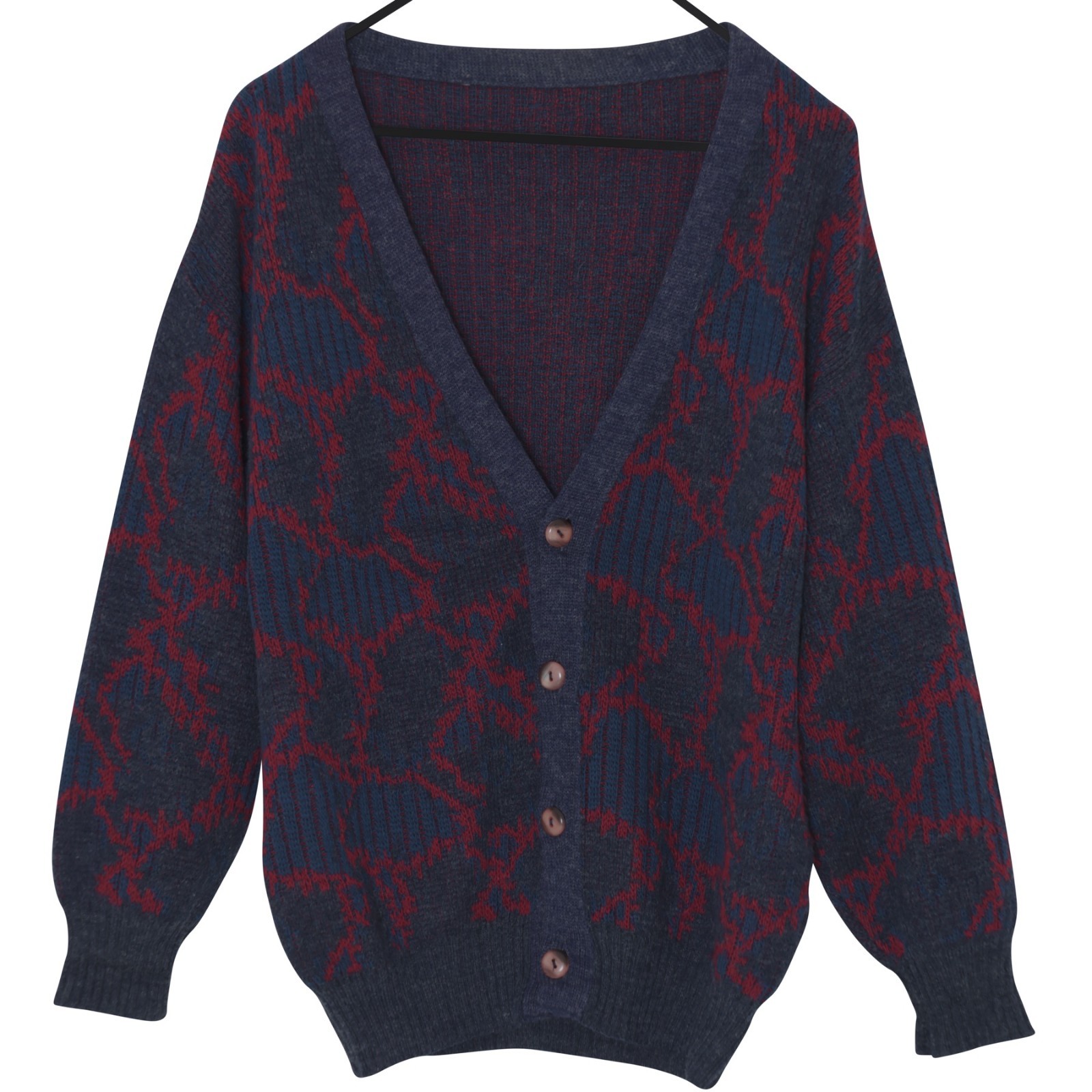


(Italy) Vintage, 1980s
$ 45.1
Description
(Italy) Vintage, 1980s. Manufacturers actually prioritized longevity and drape, so the material held its shape far better than contemporary acrylic knits and resisted pilling. This allowed air to circulate, producing a dry, stable wearing experience. A selection from our archive is now available for viewing via Google Drive, organized taxonomically to facilitate browsing across several thousand pieces, with volume-based pricing available upon request. SUNDAZED & OUTSIDE SOCIETY is recruiting a limited number of internet-era tastemakers, stylists, cultural intermediaries, and various high-functioning participants for a performance-based UGC affiliate initiative. If you've successfully transformed your personality into a content funnel and cultivated an Instagram or TikTok presence, we're prepared to monetize the experience together. We are specifically interested in individuals fluent in contemporary internet dialects and the strategic deployment of 'organic' content. If your audience remains responsive to stimuli despite widespread cognitive decline, send a DM. ...If you're sensing that this piece is underpriced, congratulations, that assessment is accurate. As such, the number you see is already the floor. c. 1980s Size Conversion (approximate): US Men’s Size: L EU Men’s Size: 50 SKU: 900332 One minor clarification seems necessary: on eBay, "Vintage" tends to imply garments that have endured a meaningful span of wear and tear. To eliminate any potential ambiguity, I'm adding an explicit disclaimer that the majority of these items are, in fact, new, unworn deadstock. This contextual cue should help orient users who are accustomed to encountering authentically fatigued clothes. One additional clarification seems necessary, given the ongoing confusion eBay manages to cultivate around U.S. orders from Europe under Trump's tariffs: contrary to the eBay disclaimer, it's the Europeans taking the hit here, not the Americans. So, to answer the recurring question about U.S. import fees: we've already covered the tariffs through our postal carrier. Your parcel arrives fully cleared; any bureaucratic bloodletting has already been performed on our side . In case the word "acrylic" triggers the usual reflexive skepticism, here are a few useful facts: Vintage acrylic fabric bore almost no resemblance to the flimsy, squeaky material most people associate with it today. Vintage acrylic has a surprisingly substantial, wool-like hand-soft, dense, and engineered to mimic natural wool fibers rather than cheap synthetics. Unlike modern production, vintage acrylic yarns were spun thicker and heat-set differently, giving it real body, impressive loft, and a warm, almost cashmere-like pile. Manufacturers actually prioritized longevity and drape, so the material held its shape far better than contemporary acrylic knits and resisted pilling. Where today's acrylic tends to be lightweight and mass-produced, its earlier counterpart was densely knit, richly textured, and built with a durability and quality far closer to wool or cashmere than anything in the bargain-bin synthetic category. The same holds true for vintage poly-wool blends. Comfort is determined less by raw fiber chemistry and more by fabric construction. Older garments relied on heavier cloth, denser weaves, long-staple wool blends. This allowed air to circulate, producing a dry, stable wearing experience. By contrast, much of contemporary production prioritizes ultra-fine fibers, added stretch, lighter yarn mass, and chemical finishing treatments, silicones, softeners, anti-wrinkle coatings, that feel smooth on the hanger but tend to collapse against the skin, trap humidity, and degrade more quickly over time. In short, polyester chemistry has advanced, but the manufacturing philosophy has shifted from durability and structural integrity toward reduced cost. The change wasn?t a clean cutoff year, but more of a gradual shift that accelerated during the 1980s and became widespread by the mid-to-late 1990s. Acrylic garments from the 1970s and early 1980s were often made with heavier yarns and denser knitting techniques because manufacturers were still trying to compete directly with wool in terms of warmth, structure, and longevity. As clothing production became increasingly cost-driven, many brands moved toward lighter yarn weights, lower fabric density, and faster manufacturing methods. By the 1990s, you can find both types. The reason I felt compelled to explain this is that experience has forced me to let go of a prejudice. After handling thousands of acrylic knits, I was surprised to discover that reality was that many acrylic yarns are remarkably effective at reproducing the appearance and hand feel of wool, and some come very close, if not indistinguishable to cashmere. The same holds true for vintage poly-wool blends. Much of the fashion of previous decades relied on heavier cloth, denser weaves, long-staple wool blends. This allowed air to circulate, producing a dry, stable wearing experience. By contrast, much of contemporary production prioritizes ultra-fine fibers, added stretch, lighter yarn mass, and chemical finishing treatments, silicones, softeners, anti-wrinkle coatings, that feel smooth on the hanger but tend to collapse against the skin, trap humidity, and degrade more quickly over time. In short, polyester chemistry has advanced, but the manufacturing philosophy has shifted from durability and structural integrity toward reduced cost. One final thought, since you've already read this far ... What continues to baffle me is how many people hold on to the assumption that the price tag or brand label is evidence of superior manufacturing. The uncomfortable truth is that mid-tier and even some of the fast-fashion from previous decades were constructed to a higher standard than much of today's designer market. In many cases, the fabrics were more substantial and the construction was more robust. What's particularly interesting is that very few people seem aware of this. The prevailing assumption is that designer labels guarantee superior quality, when in practice, branding, positioning, and perceived exclusivity often have far more influence on price than fabric selection or construction standards. Once you've handled enough garments across different eras and market segments, the gap between perception and reality becomes difficult to ignore.


